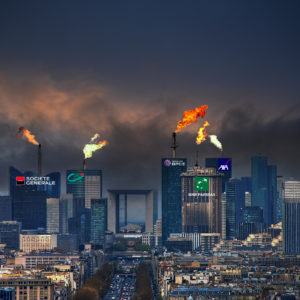
Methane emissions: investigation into the invisible pollution emitted by the gas network
Between 20 and 30 April 2026, Friends of the Earth France and Clean Air Task Force (CATF) conducted a campaign to detect methane emissions from the gas network in the south of France.
The findings, set out in the analysis report, published today, highlight a significant and persistent problem: 65% of the 57 sites inspected were emitting methane, a greenhouse gas responsible for a third of global warming. The organisations are urging the French government to implement the EU methane regulation without delay and to actively defend it.
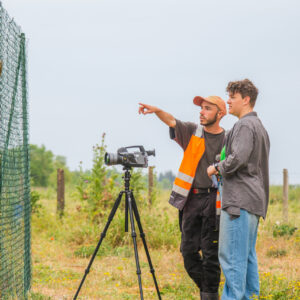
This detection mission, carried out in nine departments on infrastructure operated mainly by NaTran and Téréga, is the first independent investigation conducted in France since the European methane regulation came into force in 2024. Using a specialised infrared camera capable of visualising emissions and leaks invisible to the naked eye, the organisations detected 74 methane emissions, including leaks deemed significant enough to require immediate reporting to the operators 1.
Largely preventable emissions
- 74% of the emissions detected were unintentional leaks, linked to leaks or faulty equipment; This is far higher than in Germany, where leaks accounted for only 10% of the emissions recorded by CATF during a detection campaign in June 2025 2 ;
- only 23 of the 63 leaks observed by the associations had already been identified by the operators;
- 74% of NaTran sites had emissions, compared with 55% at Téréga’s. This difference, along with certain regional disparities, demonstrates the scope for improvement among operators. A significant proportion of NaTran’s emissions came from equipment known to release methane by design, even though emission-free alternatives exist and must be deployed under European regulations.
“Our monitoring mission shows that methane emissions from the fossil fuel sector, long underestimated, are neither marginal nor inevitable. They result from equipment designed to release methane into the atmosphere, insufficient monitoring by operators, and maintenance and repair failures. Reducing these methane emissions is imperative to minimise the climate impact of gas in the very short term,”
A climate, health and economic scandal
The global energy sector is responsible for more than a third of anthropogenic emissions of methane, an extremely potent greenhouse gas: over a twenty-year period, it warms the atmosphere 84 times more than CO₂ 3. It also contributes to the formation of ozone 4, a pollutant responsible for hundreds of thousands of premature deaths worldwide every year.
Beyond the climate and health impacts, these leaks also represent a huge waste of energy: every year in France, 4 terawatt-hours of gas are lost from the networks, equivalent to the combined gas consumption of Marseille and Amiens, at an estimated cost of €225 million 5.
Defend the European Methane Regulation (EUMR) and put an end to dependence on fossil gas
Friends of the Earth France and CATF welcome the initial effects of the European methane regulation, notably the reduction in deliberate venting and the detection efforts observed on the field. However, the organisations also warn of growing attempts by certain governments and fossil fuel lobbies to weaken this vital regulation in the name of “energy security” 6.
It must also be noted that France is slow to implement the provisions of this regulation: the penalty regime, for which the deadline was 5 August 2025, has not been adopted, and several transparency reports on emissions from gas companies have not been published by the DGEC , the designated administrative authority 7.
“Our field investigation demonstrates in concrete terms why the European Methane Regulation is essential: to protect the climate, public health and workers’ safety, whilst putting an end to the massive waste of fossil gas.”
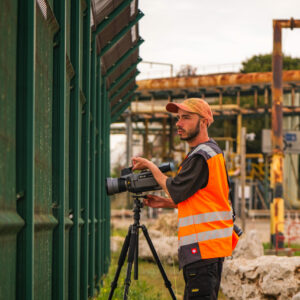
“My observations and the discussions I have had with on-site staff confirm that these rules are already having a positive impact, with the gradual replacement of polluting equipment by cleaner alternatives. It is now essential that we support, with the same ambition, the application of the same rigorous standards to oil and gas imports, because this pollution, which is unacceptable here, must not be tolerated elsewhere,” adds Théophile Humann-Guilleminot.
Anna-Lena Rebaud adds this call from Friends of the Earth: “While minimising methane emissions is essential, we must not lose sight of the fact that the bigger challenge is a just and planned phase-out of fossil fuels, the combustion of which accounts for 90% of global CO2 emissions. Indeed, the methane emissions observed on part of the French network represent only a tiny fraction of the problem. To put an end to greenhouse gas emissions, the most effective approach is to organise the reduction of gas production and consumption.”
The full report is available here (in French). CATF’s technical reports by site are available here.
Find details of the analyses in the report available here. The concerning emissions were reported to the operators, who were required to make an initial attempt at repair within 5 days, and to have sealed the leak within a maximum of 30 days after detection. Article 14.9 of the European Regulation.
This is a “snapshot” comparison between two detection missions conducted a few months apart, and not an exhaustive analysis of the entire German and French gas networks
Global Monitoring Laboratory, Trends in Atmospheric Methane, updated on 5 May 2026.
Climate Clean Air Coalition, United Nations Environment Programme, Global Methane Assessment 2021
Calculations by Friends of the Earth based on public statistics (France’s Energy Balance Sheet for 2024) for transmission losses and consumption data for cities from the ORE Agency (Distribution System Operators), available via this link:
The International Association of Oil and Gas Producers has called for numerous amendments to the European regulation, exploiting the energy crisis by claiming that the regulation would jeopardise European energy security (a false accusation), a claim previously made by Uniper.
The US Ambassador to the European Union has stepped up his criticism of the regulation, saying that the ‘supply crunch’ caused by the conflict means the EU cannot afford to be too strict, an argument echoed by the German Energy Minister. Five Central European Member States (Bulgaria, the Czech Republic, Hungary, Romania and Slovakia) have also called for simplification and extended implementation deadlines.